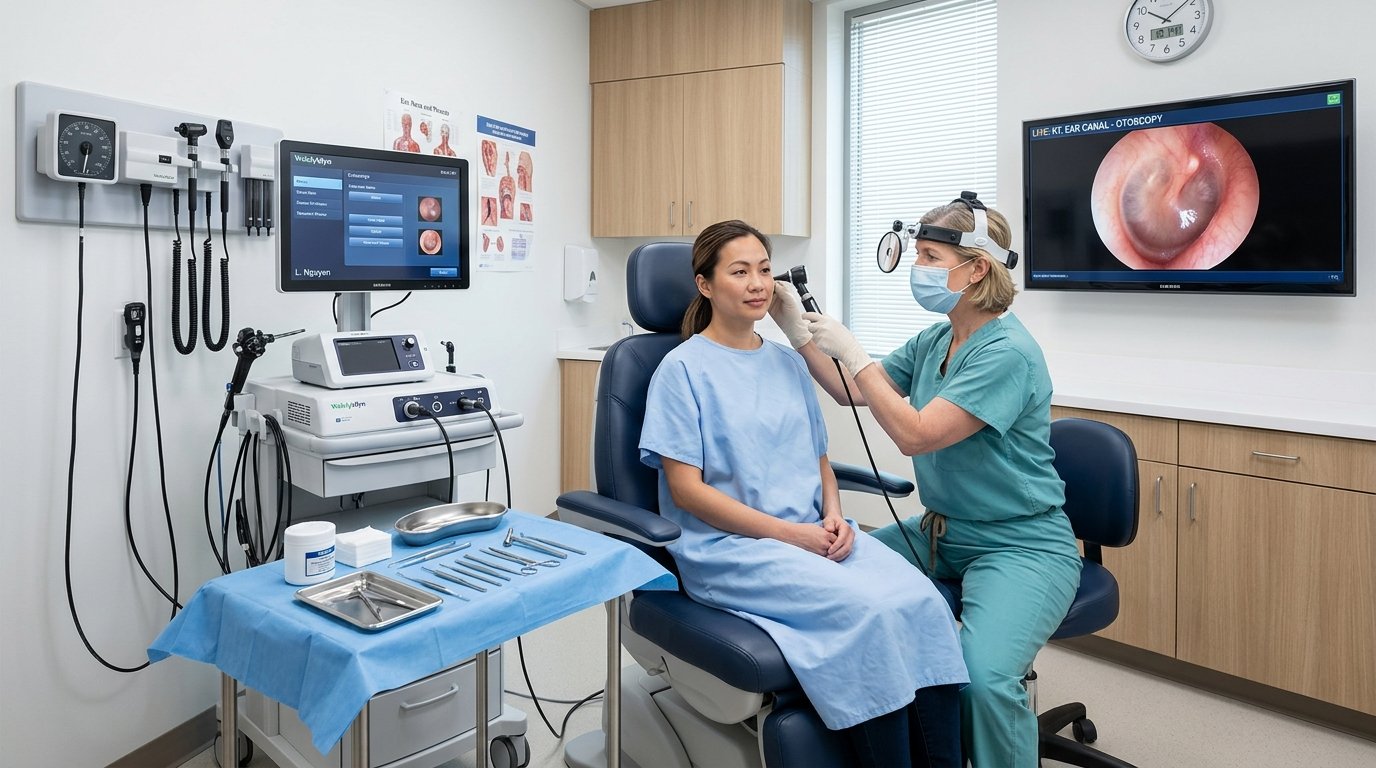
The Protective Role of Earwax (Cerumen)
Earwax is not dirt; it is a healthy, protective substance produced by ceruminous and sebaceous glands in the outer ear canal. It contains antimicrobial fatty acids and lysosomes that trap dust, repel water, and protect the fragile tympanic membrane (eardrum) from fungal and bacterial infections. Under normal conditions, natural jaw movements (chewing, talking) convey wax outward where it naturally sloughs off.
Symptoms of Cerumen Impaction
When cerumen becomes compacted or fails to migrate outward, patients commonly experience:
- Sudden or progressive muffled hearing or feeling as if water is trapped in the ear.
- A sensation of ear fullness, gentle itching, or mild dull ache.
- Tinnitus (ringing, buzzing, or hissing sounds in the affected ear).
- Reflex cough triggered by stimulation of Arnold's nerve (auricular branch of the vagus nerve).
Why You Must Stop Using Cotton Swabs (Q-Tips)
ENT Warning: Inserting cotton swabs, hairpins, or keys into the ear canal acts like a plunger, shoving wax deeper against the tympanic membrane. It can cause canal lacerations, otitis externa, and catastrophic eardrum perforations.
Safe Medical Methods for Ear Wax Removal
- Endoscopic Microsuction: The gold standard in modern ENT. The specialist directly visualizes the canal under high magnification and gently suctions out debris without introducing water into the ear.
- Controlled Low-Pressure Irrigation: Uses body-temperature sterile water or saline delivered with electronic pressure control (contraindicated if eardrum perforation is suspected).