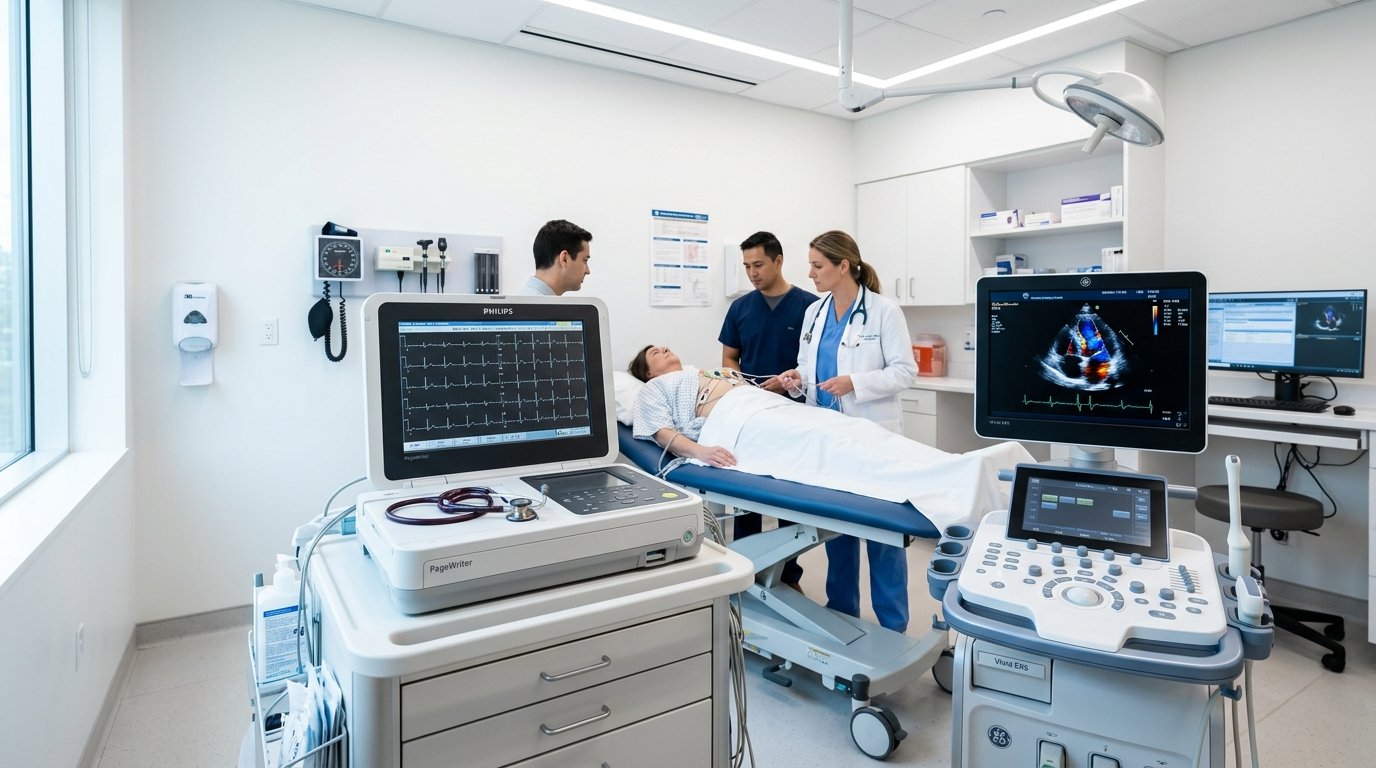
Understanding Resting ECG and Exercise Stress Testing
Electrocardiography (ECG or EKG) and cardiac stress testing are foundational diagnostic tools in modern cardiology. They evaluate the electrical conduction system of the heart, detect ischemic changes, and assess cardiac rhythm under varying metabolic demands.
1. Resting Electrocardiogram (Standard 12-Lead ECG)
A standard 12-lead ECG records the electrical impulses moving through your heart muscle via non-invasive electrodes placed on your chest, arms, and legs. It takes only a few minutes and is completely painless.
- Cardiac Arrhythmias: Identifies irregular heartbeats including atrial fibrillation, premature ventricular contractions, and bradycardia.
- Myocardial Ischemia & Infarction: Detects signs of previous heart attacks (silent ischemia) or acute coronary syndromes via ST-segment elevation or depression.
- Structural Conduction Abnormalities: Evaluates bundle branch blocks, ventricular hypertrophy, and electrolyte imbalances.
2. Exercise Stress Test (Treadmill ECG)
While a resting ECG captures a snapshot of cardiac activity at baseline, coronary artery stenosis often only reveals itself when the myocardium demands more oxygen during physical exertion. A treadmill stress test continuously monitors heart rate, blood pressure, and ECG waveform changes while you walk at graded speed and incline.
- Evaluating unexplained chest pain (angina) or shortness of breath during exertion.
- Assessing functional aerobic capacity before commencing intensive exercise programs.
- Evaluating the effectiveness of previous coronary interventions, stents, or cardiac medications.
When Should You Consult a Cardiologist?
If you experience symptoms such as tightness in the chest, unexplained palpitations, dizziness, or a strong family history of premature heart disease, a clinical evaluation accompanied by diagnostic ECG imaging is strongly advised.