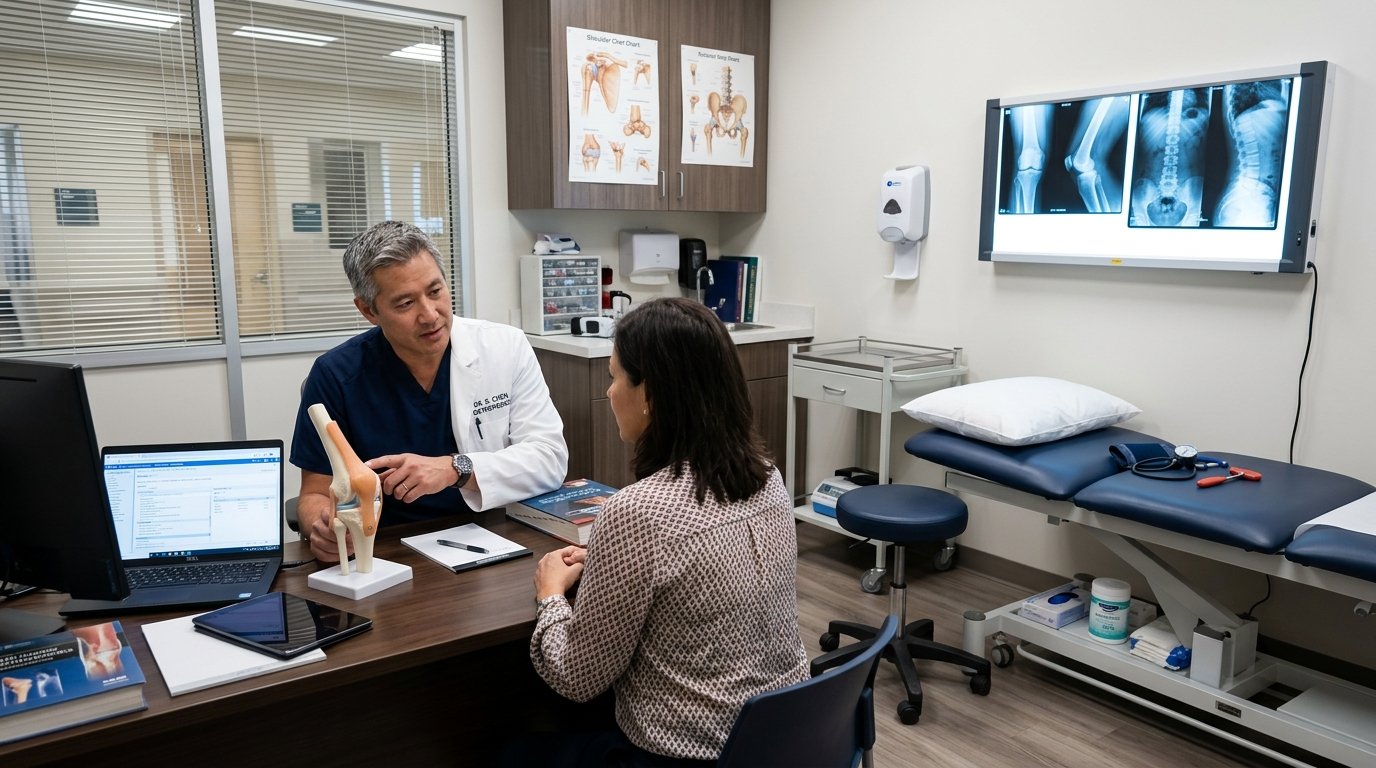
Understanding Knee Osteoarthritis and Cartilage Degeneration
Knee osteoarthritis is a progressive degenerative joint disorder characterized by the gradual breakdown of articular hyaline cartilage, subchondral bone remodeling, and low-grade synovial inflammation. As cartilage thins, the protective joint space diminishes, leading to joint stiffness, crepitus (grating sounds), and pain during weight-bearing activities.
Grading Knee Osteoarthritis
- Grade 1 (Doubtful): Minimal osteophytic lip, no joint space narrowing.
- Grade 2 (Mild): Definite small osteophytes, possible joint space reduction.
- Grade 3 (Moderate): Multiple osteophytes, definite joint space narrowing, early sclerosis.
- Grade 4 (Severe): Large osteophytes, marked joint space obliteration, bone-on-bone contact.
Advanced Non-Surgical Treatment Modalities
For Grades 1 through 3, modern conservative orthopedics offers highly effective joint-preserving treatments:
- Platelet-Rich Plasma (PRP) Therapy: Concentrated autologous growth factors injected into the intra-articular space to modulate synovial inflammation and promote tissue micro-repair.
- Hyaluronic Acid Viscosupplementation: Cross-linked hyaluronic gel mimics healthy synovial fluid, restoring mechanical lubrication and shock absorption.
- Targeted Quadriceps Strengthening: Specific isometric physical therapy exercises build the vastus medialis obliquus (VMO) muscle, reducing compressive loads on the tibiofemoral joint.
- Weight Optimization: Every kilogram of excess body weight lost removes approximately 4 kilograms of mechanical pressure across the knees with every step.